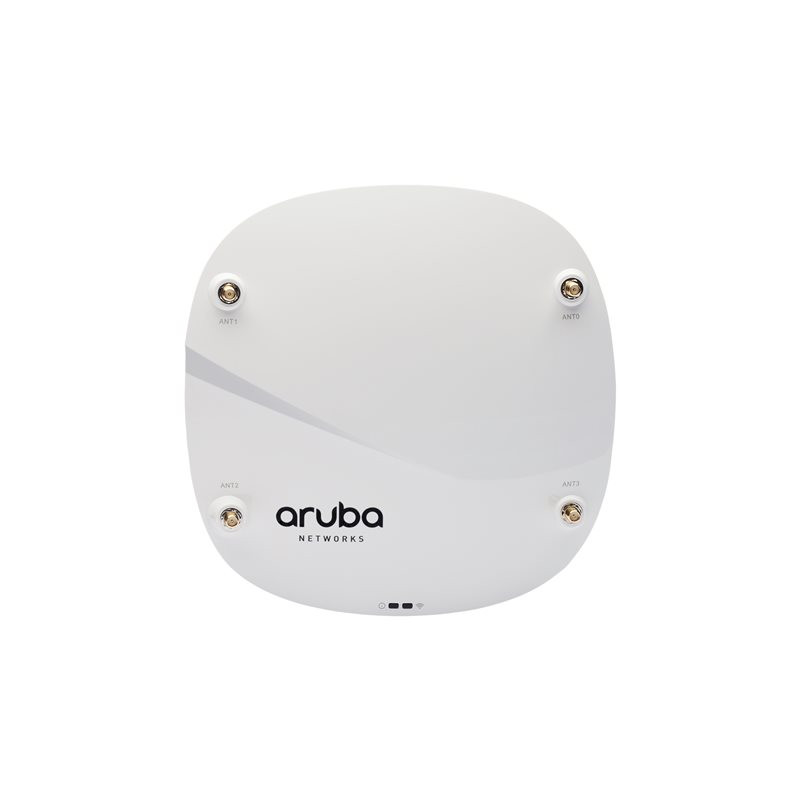
Améliore l'efficacité du réseau. La technologie MIMO (MU-MIMO) multi-utilisateur permet de transmettre vers plusieurs clients Wave 2 en même temps depuis un point d'accès.Balise Bluetooth intégrée. Les points d'accès de la série 320 sont dotés de balises BLE permettant de simplifier la gestion d'un large réseau de balises alimentées par pile.
Auto-détection par dispositif, auto-uplink (MDI/MDI-X auto), prise en charge de DFS (Dynamic Frequency Selection), Quality of Service (QoS), PoE+, Trusted Platform Module (TPM), Adaptive Radio Management (ARM), Maximum Ratio Combining (MRC), Low D
Auto-détection par dispositif, auto-uplink (MDI/MDI-X auto), prise en charge de DFS (Dynamic Frequency Selection), Quality of Service (QoS), PoE+, Trusted Platform Module (TPM), Adaptive Radio Management (ARM), Maximum Ratio Combining (MRC), Low D
Auto-détection par dispositif, auto-uplink (MDI/MDI-X auto), prise en charge de DFS (Dynamic Frequency Selection), Quality of Service (QoS), PoE+, Trusted Platform Module (TPM), Adaptive Radio Management (ARM), Maximum Ratio Combining (MRC), Low D
Auto-détection par dispositif, auto-uplink (MDI/MDI-X auto), prise en charge de DFS (Dynamic Frequency Selection), Quality of Service (QoS), PoE+, Trusted Platform Module (TPM), Adaptive Radio Management (ARM), Maximum Ratio Combining (MRC), Low D
Auto-détection par dispositif, auto-uplink (MDI/MDI-X auto), prise en charge de DFS (Dynamic Frequency Selection), Quality of Service (QoS), PoE+, Trusted Platform Module (TPM), Adaptive Radio Management (ARM), Maximum Ratio Combining (MRC), Low D
Auto-détection par dispositif, auto-uplink (MDI/MDI-X auto), prise en charge de DFS (Dynamic Frequency Selection), Quality of Service (QoS), PoE+, Trusted Platform Module (TPM), Adaptive Radio Management (ARM), Maximum Ratio Combining (MRC), Low D
Auto-détection par dispositif, auto-uplink (MDI/MDI-X auto), prise en charge de DFS (Dynamic Frequency Selection), Quality of Service (QoS), PoE+, Trusted Platform Module (TPM), Adaptive Radio Management (ARM), Maximum Ratio Combining (MRC), Low D
Auto-détection par dispositif, auto-uplink (MDI/MDI-X auto), prise en charge de DFS (Dynamic Frequency Selection), Quality of Service (QoS), PoE+, Trusted Platform Module (TPM), Adaptive Radio Management (ARM), Maximum Ratio Combining (MRC), Low D
Auto-détection par dispositif, auto-uplink (MDI/MDI-X auto), prise en charge de DFS (Dynamic Frequency Selection), Quality of Service (QoS), PoE+, Trusted Platform Module (TPM), Adaptive Radio Management (ARM), Maximum Ratio Combining (MRC), Low D
Auto-détection par dispositif, auto-uplink (MDI/MDI-X auto), prise en charge de DFS (Dynamic Frequency Selection), Quality of Service (QoS), PoE+, Trusted Platform Module (TPM), Adaptive Radio Management (ARM), Maximum Ratio Combining (MRC), Low D
Auto-détection par dispositif, auto-uplink (MDI/MDI-X auto), prise en charge de DFS (Dynamic Frequency Selection), Quality of Service (QoS), PoE+, Trusted Platform Module (TPM), Adaptive Radio Management (ARM), Maximum Ratio Combining (MRC), Low D
Auto-détection par dispositif, auto-uplink (MDI/MDI-X auto), prise en charge de DFS (Dynamic Frequency Selection), Quality of Service (QoS), PoE+, Trusted Platform Module (TPM), Adaptive Radio Management (ARM), Maximum Ratio Combining (MRC), Low D
Auto-détection par dispositif, auto-uplink (MDI/MDI-X auto), prise en charge de DFS (Dynamic Frequency Selection), Quality of Service (QoS), PoE+, Trusted Platform Module (TPM), Adaptive Radio Management (ARM), Maximum Ratio Combining (MRC), Low D
Auto-détection par dispositif, auto-uplink (MDI/MDI-X auto), prise en charge de DFS (Dynamic Frequency Selection), Quality of Service (QoS), PoE+, Trusted Platform Module (TPM), Adaptive Radio Management (ARM), Maximum Ratio Combining (MRC), Low D
Caractéristiques d'environnement : Température minimale de fonctionnement
0 °C
Caractéristiques d'environnement : Température maximale de fonctionnement
50 °C
Caractéristiques d'environnement : Taux d'humidité en fonctionnement
Clients sans fil : 255 ¦ BSSID par radio : 16
Clients sans fil : 255 ¦ BSSID par radio : 16
Clients sans fil : 255 ¦ BSSID par radio : 16
Clients sans fil : 255 ¦ BSSID par radio : 16
Clients sans fil : 255 ¦ BSSID par radio : 16
Clients sans fil : 255 ¦ BSSID par radio : 16
Clients sans fil : 255 ¦ BSSID par radio : 16
Clients sans fil : 255 ¦ BSSID par radio : 16
Clients sans fil : 255 ¦ BSSID par radio : 16
Clients sans fil : 255 ¦ BSSID par radio : 16
Clients sans fil : 255 ¦ BSSID par radio : 16
Clients sans fil : 255 ¦ BSSID par radio : 16
Clients sans fil : 255 ¦ BSSID par radio : 16
Clients sans fil : 255 ¦ BSSID par radio : 16
Réseaux : Format
Intégré au plafond
Général : Bande de fréquence
2.4 GHz, 5 GHz
Réseaux : Capacité
Clients sans fil : 255 ¦ BSSID par radio : 16
Clients sans fil : 255 ¦ BSSID par radio : 16
Clients sans fil : 255 ¦ BSSID par radio : 16
Clients sans fil : 255 ¦ BSSID par radio : 16
Clients sans fil : 255 ¦ BSSID par radio : 16
Clients sans fil : 255 ¦ BSSID par radio : 16
Clients sans fil : 255 ¦ BSSID par radio : 16
Clients sans fil : 255 ¦ BSSID par radio : 16
Clients sans fil : 255 ¦ BSSID par radio : 16
Clients sans fil : 255 ¦ BSSID par radio : 16
Clients sans fil : 255 ¦ BSSID par radio : 16
Clients sans fil : 255 ¦ BSSID par radio : 16
Clients sans fil : 255 ¦ BSSID par radio : 16
Clients sans fil : 255 ¦ BSSID par radio : 16
Général : Prise en charge de l'alimentation sous Ethernet (PoE)
PoE
Réseaux : Bande de fréquence
2.4 GHz, 5 GHz
Réseaux : Format de codage de ligne
CCK, 64 QAM, 256 QAM, BPSK, QPSK, 16 QAM
Réseaux : Méthode d'étalement du spectre
OFDM, DSSS
Alimentation : Prise en charge de l'alimentation sous Ethernet (PoE)